Nexus: the internal tools we needed, built with AI
Playfull’s in-house operations platform. Instead of paying for many tools full of features we didn’t use (dashboards, lists, docs, boards), we used AI to build exactly the tools we needed, in one place, which cut costs and sped the team up. I designed the design system and the structure the team builds on, designed the project board and the calendar, and prototyped the interface in code with AI, reviewed and finished by engineering.
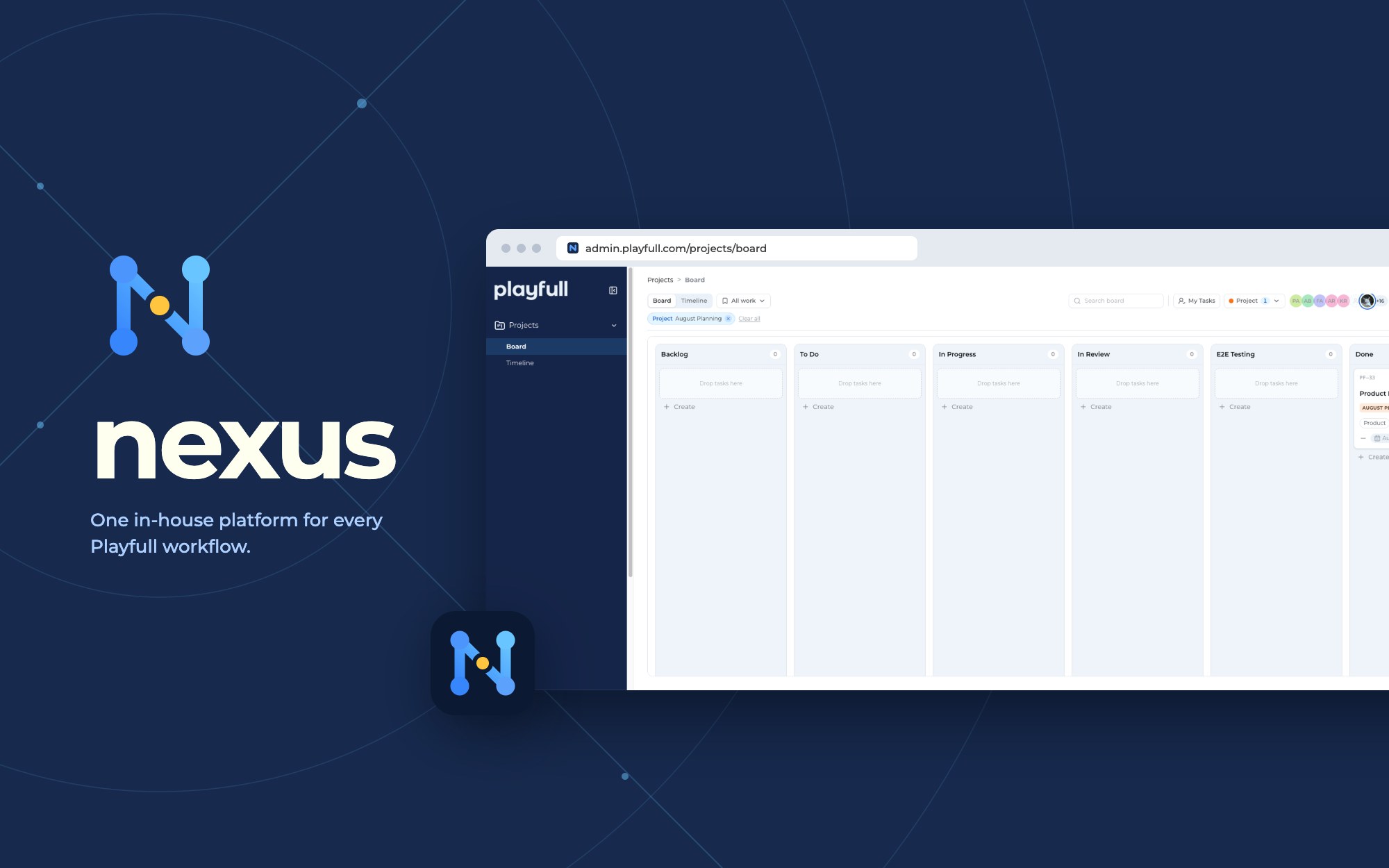
Many tools, many versions of the truth, and a lot of features nobody needed. Bespoke apps went stale, and fixing one meant waiting for an engineer.
Led UX/UI from the Partner Portal to Nexus: design system and structure, project board and calendar, prototyped in code with AI and completed by engineering.
The project board and calendar have been the company’s planning tools since August 2026. Metrics available in conversation.
Context
Nexus started as the Partner Portal at the beginning of 2026, the first product I designed with AI in the loop, and grew into the company’s operations platform: game data and Steam quest creation, ad-ops, company-wide project management, and an AI layer over the knowledge base.
The problem
Fragmentation and maintenance cost, not licence cost. Each team kept its work somewhere different; nobody could see the chain from a task to the company goal it served.
Process
Foundation first
A design system and a page structure the team could extend without me: tokens, components, layout rules.
The project board
Kanban and timeline views of the same work, so a team can run its week on the board and leadership can read the quarter on the timeline.
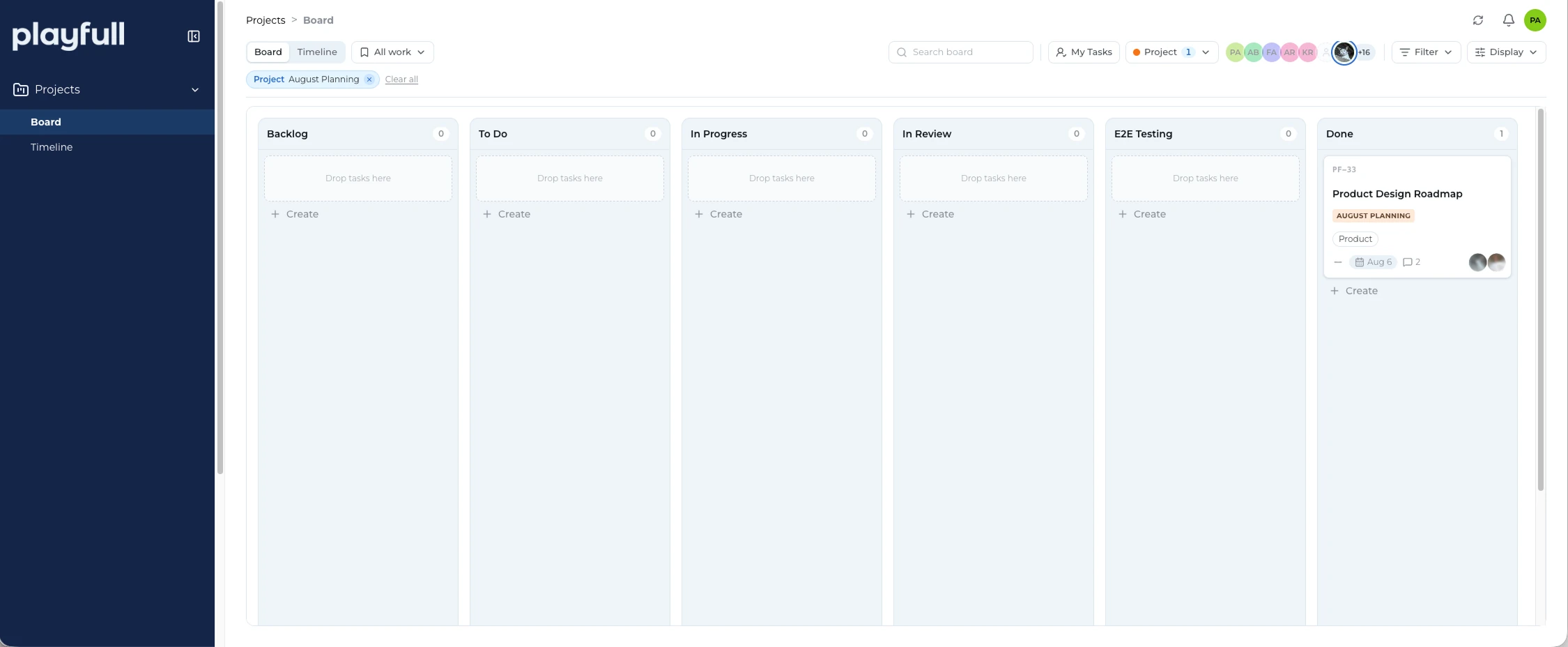
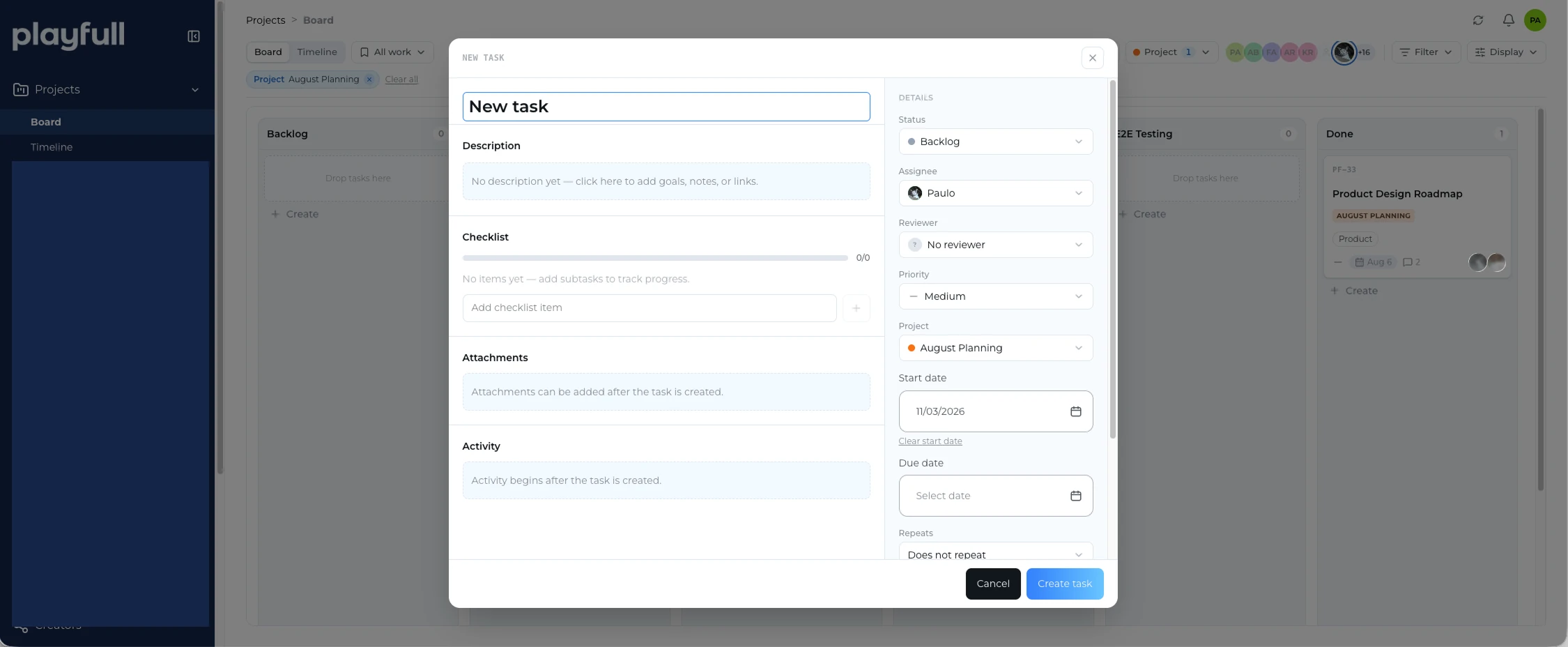
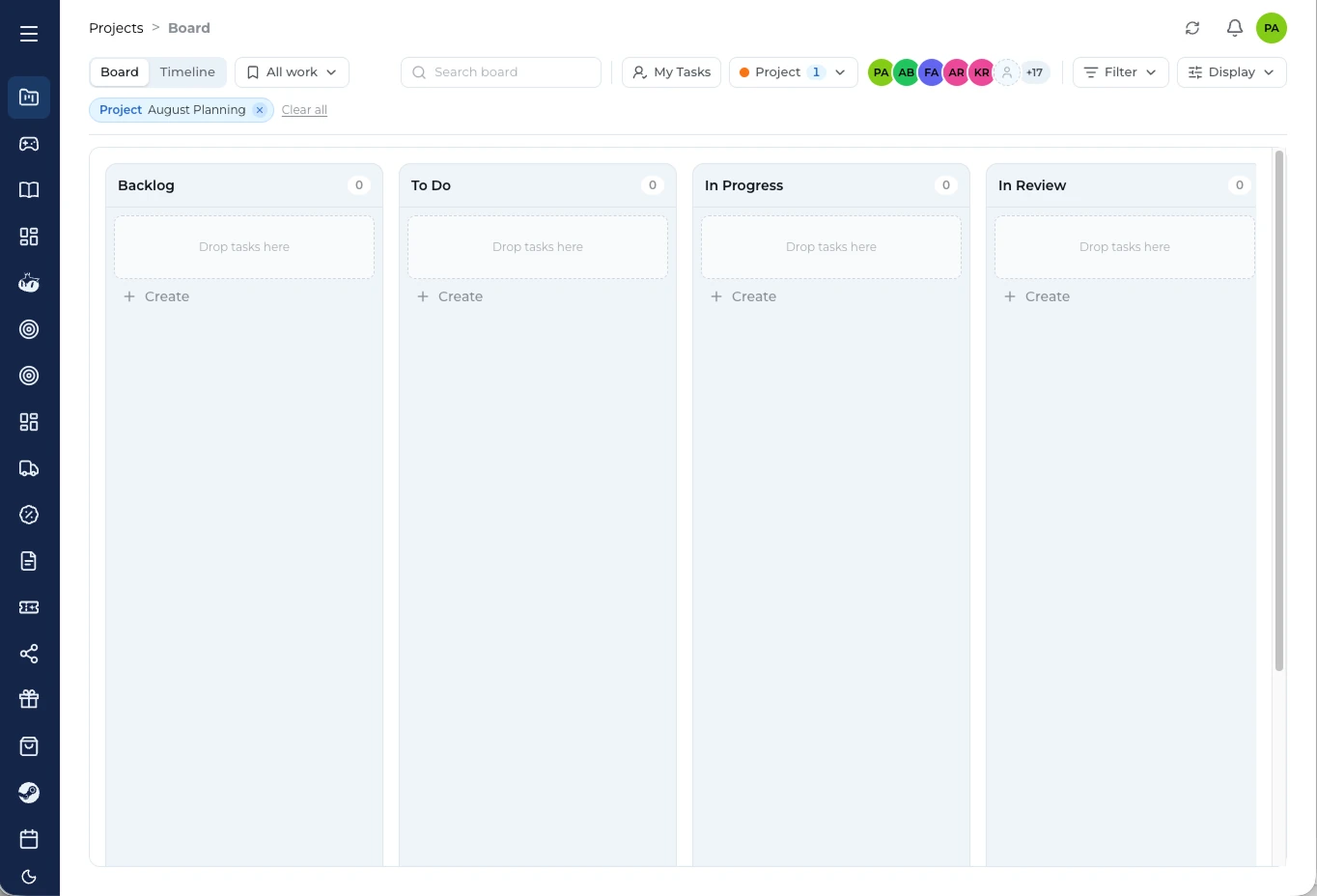
The project board, the new task dialog, and the board on a smaller screen.
The calendar
One company-wide view of deadlines, launches and events, pulled from the same projects.
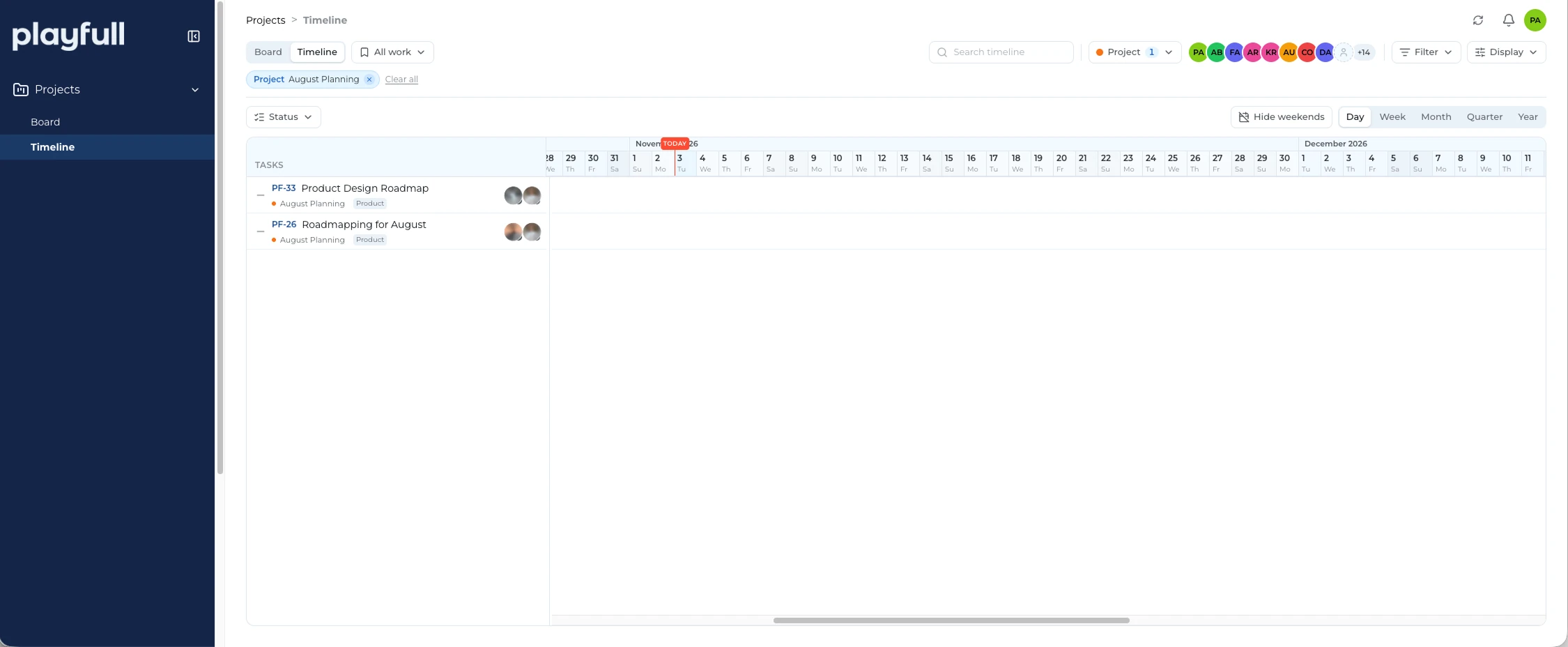
The timeline, with day, week, month, quarter and year views.
Prototyped in code, finished with engineering
I prototyped in code with AI on a branch, and the engineering owner reviewed it and built it properly.
Let the team build the rest
Other modules were created by the team directly on the foundation, which is the point of a foundation.
Decisions
In Jira, moving a card to review meant reassigning it, and the owner lost sight of it. Here ownership never moves; review is a second person on the card.
Company goals live inside the tool, not in the memory of whoever was in the meeting.
Slack bot DMs, GitHub automation and a separate E2E column waited for v2.
Outcome
Project module live company-wide since August 2026; Steam quest creation live; named Nexus by team vote the same month. Metrics available in conversation.
Takeaway
Building our own tool sounded like a way to save money. In practice it was a design problem first. Nobody misses a feature they never used, but everyone notices when a board doesn’t match how their team runs its week. So a lot of the work was deciding what to leave out, and saying no to features that other tools had only because other tools had them.
The reviewer decision is a good example of where the value was. It came from a small annoyance in Jira that the whole team had learned to live with: sending a card to review meant giving it away. Fixing it was one extra field on the card, and it changed how review works across the company.
Owning the tool also means owning what happens when I’m not there. While I was on holiday, a few screens were built without me and drifted from the rest. That isn’t on the team; it showed me the foundation wasn’t yet clear enough to stand on its own. The goal now is a design system where someone can build a new module without asking me, and it still looks and behaves like Nexus.